
Chapter 4
Creating a Rich Foundation for Chaos Embroidery
Why Backgrounds Matter
Your background is much more than simply fabric.
It is the first layer of your artwork and establishes texture, colour, depth, and visual interest before any decorative stitching begins.
The techniques in this module are designed to be flexible and can be applied to many different textile projects, including:
Slow stitch journals
Snippet rolls
Mounted textile art
Fabric books
Mixed media pieces
Quilts
Wearable art
Home décor
Think of each sample in this course as a building block that can become part of something larger
Key Takeaway
Your background isn't just something you stitch on—it becomes part of the finished artwork.
The more intention, texture, and story you build into the foundation, the more depth and richness your finished chaos embroidery will have.
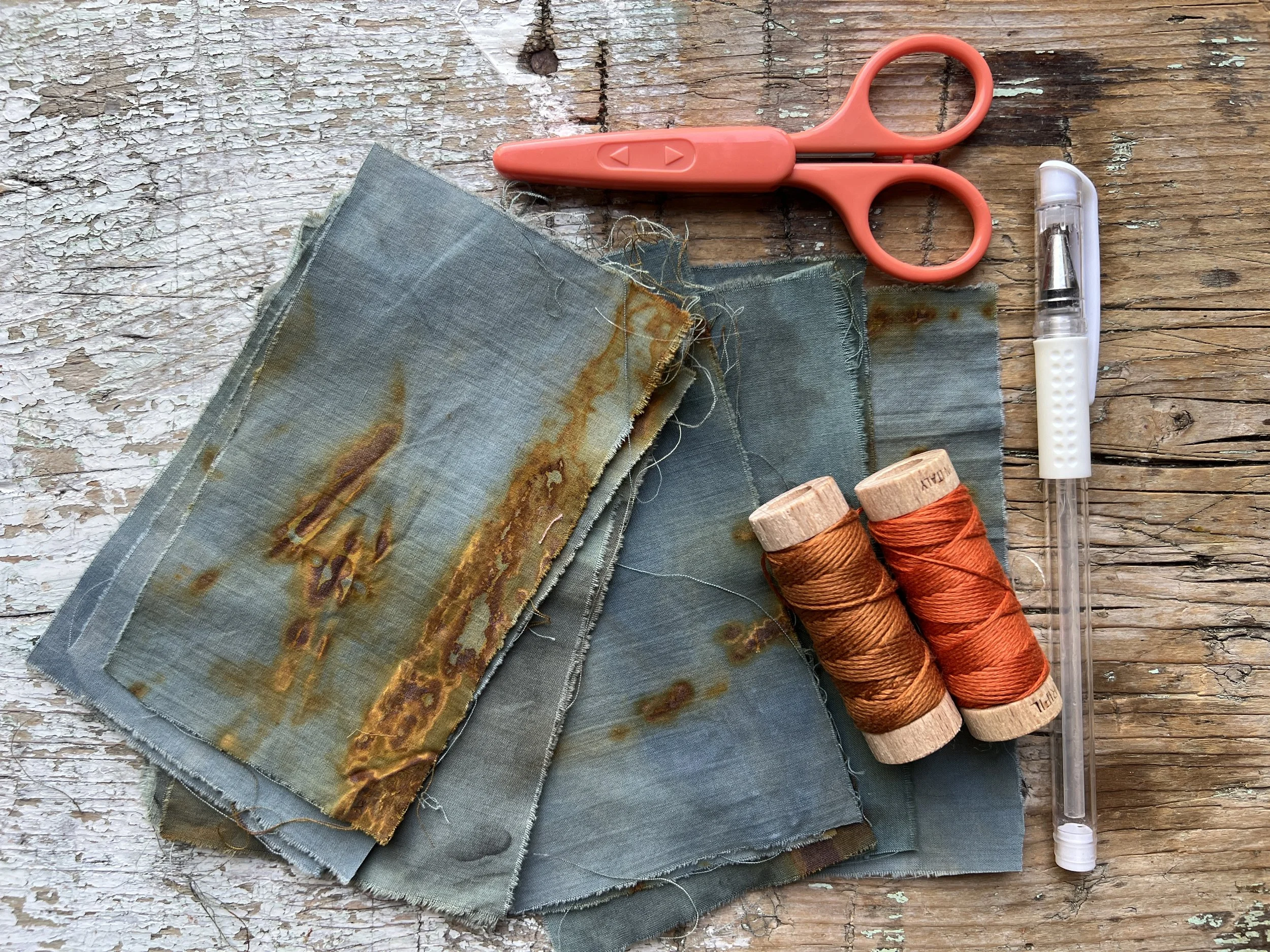
Indigo and rust dyed fabrics.
-
I primarily work with woven fabrics because they accept dye, paint, and stitching beautifully.
My favourites include:
Cotton muslin (calico)
Cotton canvas
Linen
These fabrics can be used:
plain
dyed
painted
stitched
layered
collaged
-
Before decorative stitching, consider adding texture by:
Textile collage
Kantha-inspired running stitches
Natural dyeing
Eco-printing
Acrylic paint washes
Stencilling
Lettering
Metallic foil
Printed fabrics
-
Finished stitched pieces can be mounted onto many different surfaces.
Ideas include:
Linen panels
Canvas panels
Linen-covered boards
Encaustic panels
Eco-printed paper
Cyanotype paper
Gel prints
Paste papers
Book cloth
Cork
Handmade papers
Natural surfaces often enhance the warmth and handmade quality of stitched textiles.